Abdelrahman Alkahlout — 1st Place, Street
An interview with Abdelrahman Alkahlout
GLPA 2025 Winner Interview
Abdelrahman Alkahlout — 1st Place, Street
Faith Amid Genocide
We’re honored to feature Abdelrahman Alkahlout, 1st Place in Street at the Global Lens Photography Awards 2025.
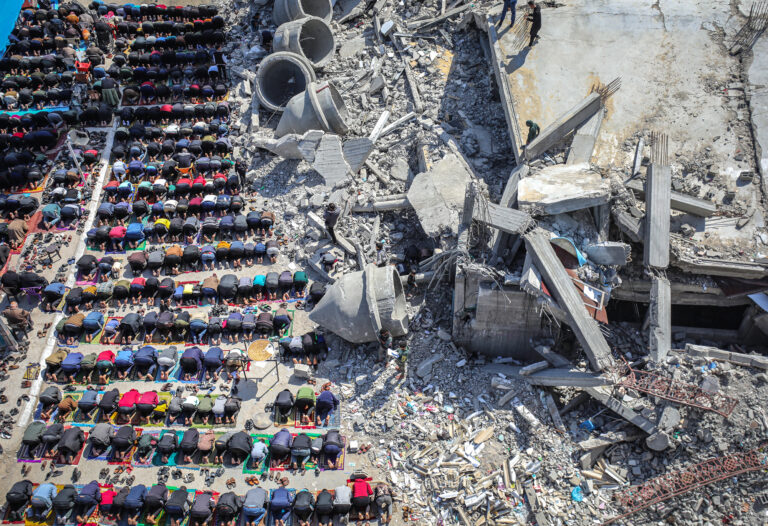
In Faith Amid Genocide, Abdelrahman documents a moment of prayer in Gaza that is at once intimate, historical, and profoundly human.
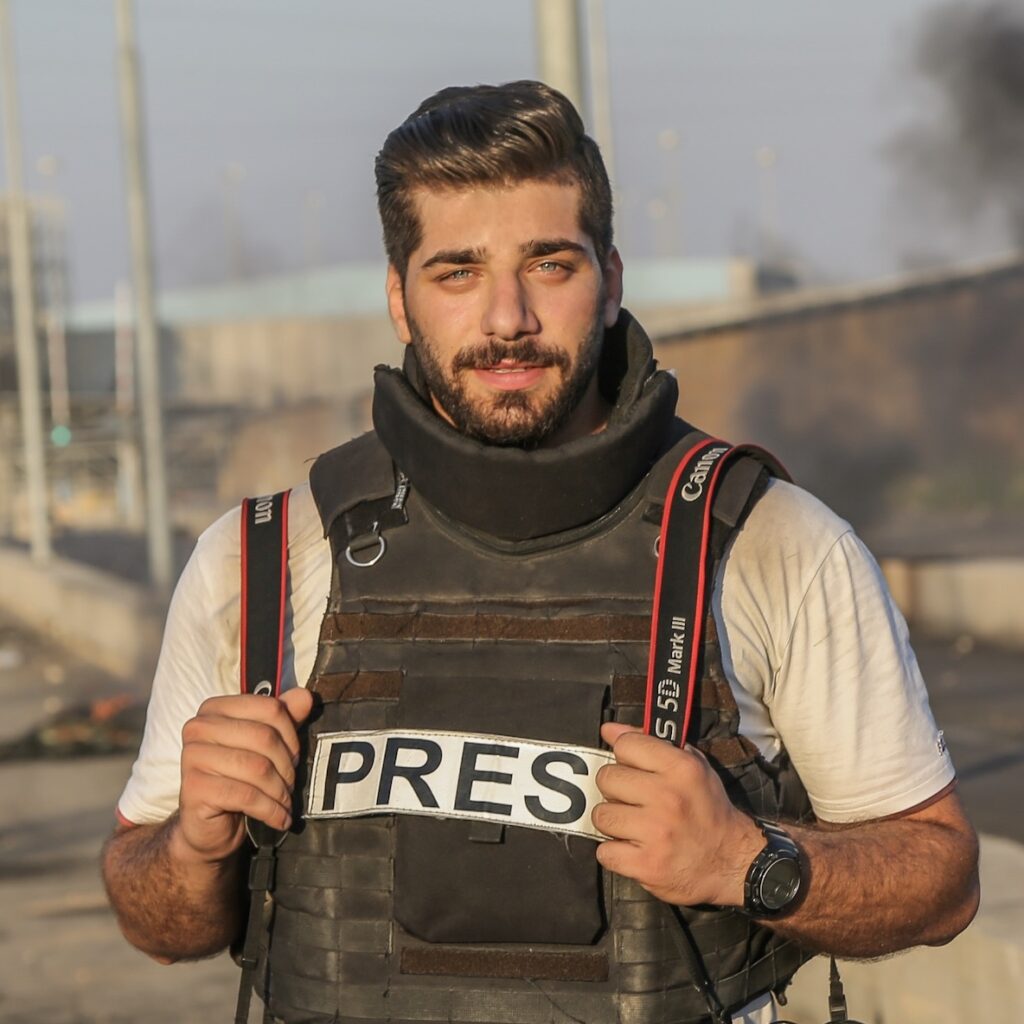
As a photojournalist from Gaza, he works not as a distant observer, but as someone bearing witness from within his own community—preserving memory, dignity, and truth in the face of catastrophe.
In “Faith Amid Genocide,” prayer becomes both intimate and monumental. What did you feel in the moment you made this photograph?
In that moment, I felt I was witnessing something far greater than a photograph. Around me was destruction — a mosque reduced to rubble and a city wounded by war — yet hundreds of people stood together in prayer.
What I felt was a mixture of pain and awe. Pain because this prayer was happening among ruins that once held life, community, and safety. But also awe, because despite everything, people still gathered with dignity and faith.
When I raised my camera, I understood that this was not only a moment of worship. It was a quiet act of resilience. Even when the walls collapse and everything familiar disappears, faith becomes the space where people still stand together.
For me, that moment revealed something powerful: destruction can break buildings, but it cannot easily break the human spirit.
The image holds devastation and dignity in the same frame. How did you approach photographing such a painful reality with care and responsibility?
For me, this is not distant journalism. This is my home, my people, and my reality. I photograph these moments with a deep sense of responsibility because the people in my images are not strangers — they are my neighbors, my friends, and families like my own.
My intention is never to exploit pain, but to honor the dignity of those who are living through it. Even in the darkest moments, I try to show the humanity that still exists — the strength, the faith, and the resilience of people who refuse to disappear.
As a photographer from Gaza, I carry both the pain of witnessing and the duty of documenting. My camera becomes a way to protect memory and to make sure that the suffering of civilians is seen, understood, and not ignored by the world.
What did this scene reveal to you about faith—not only as belief, but as endurance?
That moment showed me that faith in Gaza is not only a belief — it is a form of endurance. When people pray on the ruins of a destroyed mosque, it is not just about religion; it is about refusing to surrender to despair.
Faith becomes a way for people to hold on to their humanity when everything around them is collapsing. In Gaza, prayer is sometimes the only space where people can gather, breathe, and remind themselves that they are still alive.
What I witnessed that day was not only worship. It was a quiet resistance against fear and destruction. It showed me that even when homes, streets, and mosques are destroyed, faith can still stand where the walls once stood.
In situations of destruction and grief, how do you decide when to raise the camera and when not to?
This is one of the hardest decisions a photographer has to make. In Gaza, I am not only a photographer — I am also part of the same reality and the same pain.
Before raising my camera, I always ask myself whether the image will help tell the truth and preserve the dignity of the people in it. If a moment feels too private, too painful, or if someone’s grief needs silence instead of a lens, I choose not to photograph.
But there are also moments when documenting becomes a responsibility. When civilians are suffering and the world may not see it, the camera becomes a witness. In those moments, raising the camera is not about taking a picture — it is about protecting the truth and making sure these stories are not erased.
Your photograph is deeply specific to Gaza, yet it speaks universally. What do you hope people outside the region understand when they see it?
I hope people outside Gaza understand that behind the headlines and statistics, there are human lives, families, and communities trying to survive.
This image shows that even under extreme destruction, people still hold on to their dignity, their faith, and their humanity. The men praying in the ruins are not only representing Gaza — they represent a universal human need for hope when everything else is collapsing.
I want viewers to see that the people of Gaza are not just victims of war. They are individuals with strength, belief, and resilience. Through this image, I hope the world can look beyond politics and see the human story — a story about survival, faith, and the refusal to lose one’s humanity even in the darkest times.
Was there one detail in that moment that made you realize this image carried something larger?
Yes, it was the contrast that struck me most. The rows of people standing calmly in prayer, perfectly aligned, while around them everything was broken — stones, walls, and the remains of a destroyed mosque.
There was a deep silence in that moment. No chaos, no shouting, only the quiet rhythm of prayer among the ruins. That contrast made me realize the image carried something larger than a single scene.
It was not just about destruction. It was about dignity standing in the middle of devastation. At that moment, I understood that this photograph was capturing a symbol — faith and unity surviving where everything else had collapsed.
Street photography often captures fleeting moments, but this image feels historical. How do you personally think about the role of photography in preserving memory during catastrophe?
For me, photography during catastrophe is not only about capturing a moment — it is about protecting memory. Wars destroy buildings, streets, and sometimes entire communities, but photographs can preserve what happened and who lived through it.
In Gaza, many stories risk disappearing under the rubble. When I photograph these moments, I feel that I am helping to safeguard the memory of people who are living through unimaginable circumstances.
Images become a form of historical testimony. Long after the sounds of war fade, photographs remain as evidence that these lives existed, these prayers happened, and this resilience was real. For me, photography is a way of making sure that memory cannot be erased.
What does this GLPA recognition mean to you, and what responsibility do you feel as a photographer carrying stories like this into the world?
This recognition means a lot to me, not only as a photographer but as someone who lived through the reality behind the image. For me, the award is not just a personal achievement — it is a way for the voices and experiences of people in Gaza to reach a wider audience.
Every time an image like this is recognized internationally, it reminds the world that these stories are real and that they deserve to be seen and remembered.
With that recognition comes responsibility. My responsibility is to continue documenting with honesty, dignity, and respect for the people whose lives I photograph. Their stories are not just images — they are memories, struggles, and human lives that deserve to be told with truth and care.