Barry Crosthwaite — 3rd Place, Travel
An interview with Barry Crosthwaite
GLPA 2025 Winner Interview
Barry Crosthwaite — 3rd Place, Travel
Infinite
We’re pleased to feature Barry Crosthwaite, 3rd Place in Travel at the Global Lens Photography Awards 2025.
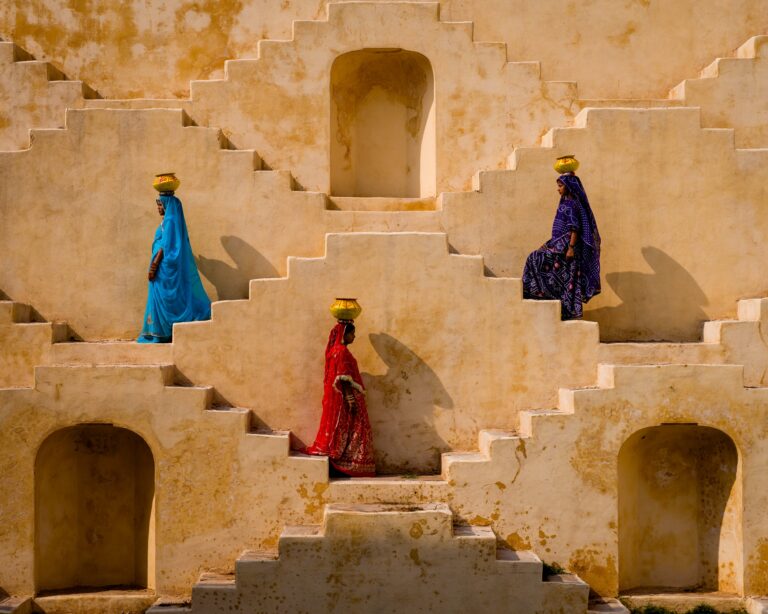
In Infinite, Barry transforms the historic stepwells of Rajasthan into a photograph that is at once architectural, cultural, and quietly surreal.
Drawing on a lifelong passion for photography and travel, his work brings together geometry, history, and the human presence with a calm and thoughtful precision.
“Infinite” is a powerful title. What did you see in this stepwell that made that word feel exactly right?
When I first saw the Panna Meena Kund stepwell in 2016, the repeating stairs in the eight-story structure made me think of MC Escher’s drawing Relativity, where his optical illusion makes the stairs never ending. I felt the repetition of the stairs, the women captured in somewhat mysterious circular motion, and the more than 1000 years of cultural history were well summed up by the title “Infinite.”
Stepwells are both practical structures and extraordinary works of design. What most interested you here—the geometry, the history, or the human stories embedded in the place?
It was the intersection of all three. The geometry is what first catches the eye, but the history of water management in an arid climate gives that geometry a purpose. My goal was to reintroduce the human element—the daily ritual of transporting water—to show that these aren’t just ruins; they were vital communal spaces where life was sustained.
Your image turns a historical site into something almost abstract. How did you approach composition to preserve both beauty and meaning?
I framed the scene tightly with three symmetrical alcoves surrounded by stairs going symmetrically in all directions—attempting to create a sense of infinity. Three models were placed to echo the alcoves, and dressed to separate from the monochrome background as well as to highlight the cultural history. Lighting was critical. The shot was taken in a 15-minute midday window where shadows separate the alcoves, add interest to the women, and highlight the texture of the ancient stone.
Rajasthan’s stepwells carry centuries of cultural and environmental intelligence. What did photographing this space teach you about the relationship between necessity and beauty?
Photographing this space reminded me symmetry is often the ultimate form of efficiency, allowing hundreds of people to access water simultaneously while creating natural cooling pockets. This design shows that simplicity is often the most beautiful solution, where the architecture required for survival becomes a work of art through its perfect, functional logic.
Your love of photography and travel began with National Geographic and continued through decades of global travel. How has that long journey shaped the way you respond to places like this?
During my business career time was the most precious resource and efficiency was critical to decision making. This efficiency influenced other aspects of my life, including planning trips and making photographs. Since retiring from finance, I make more time to absorb places and enjoy experiences and connections with local people. I enjoy the entire process of photography more and have less emphasis on getting the final result.
You once stood between business and art, and after retiring you chose to explore “the other side” of your brain more fully. How has that shift changed the way you photograph?
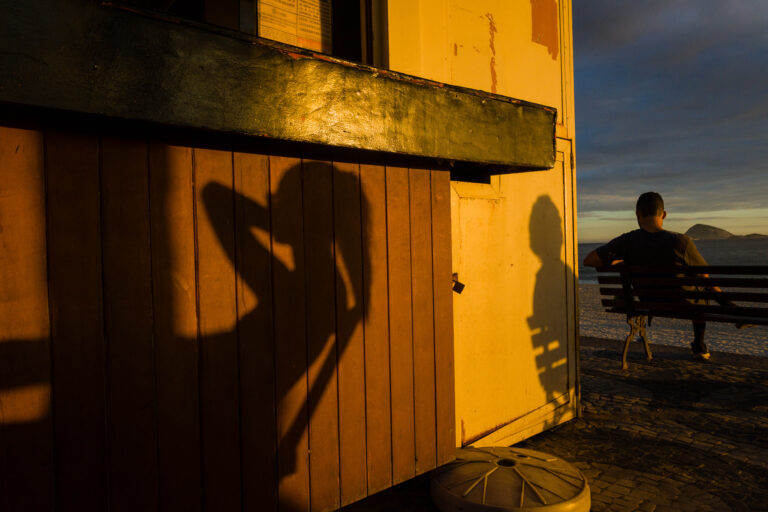
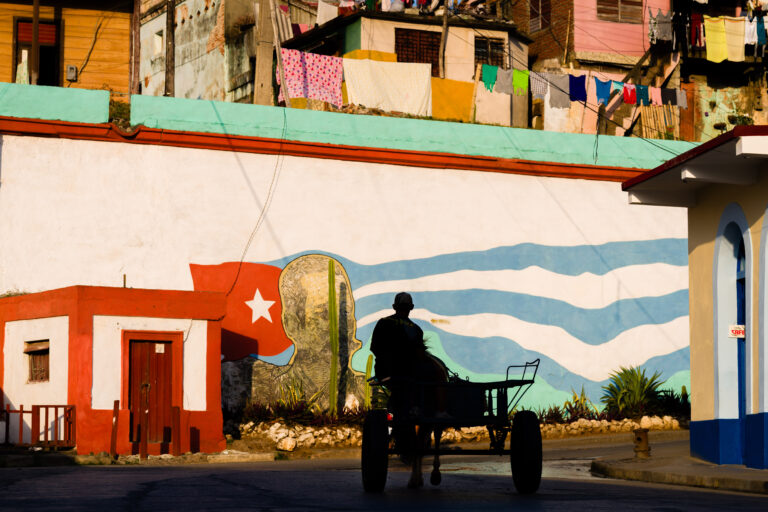
With additional time I studied many masters of photography and have become much more interested in candid and documentary street photography. I rarely make photos now without a human being and the human condition as the main subject.
Was there a particular detail in this stepwell—light, shadow, texture, silence, scale—that stayed with you after you left?
I think the initial impression of scale and symmetry was what took my breath away and what I remember. I tried to combine photographic elements to recreate that emotion and as well as honor the architecture and culture.
What does this GLPA recognition mean to you, and what kind of subjects or destinations are currently pulling you forward?
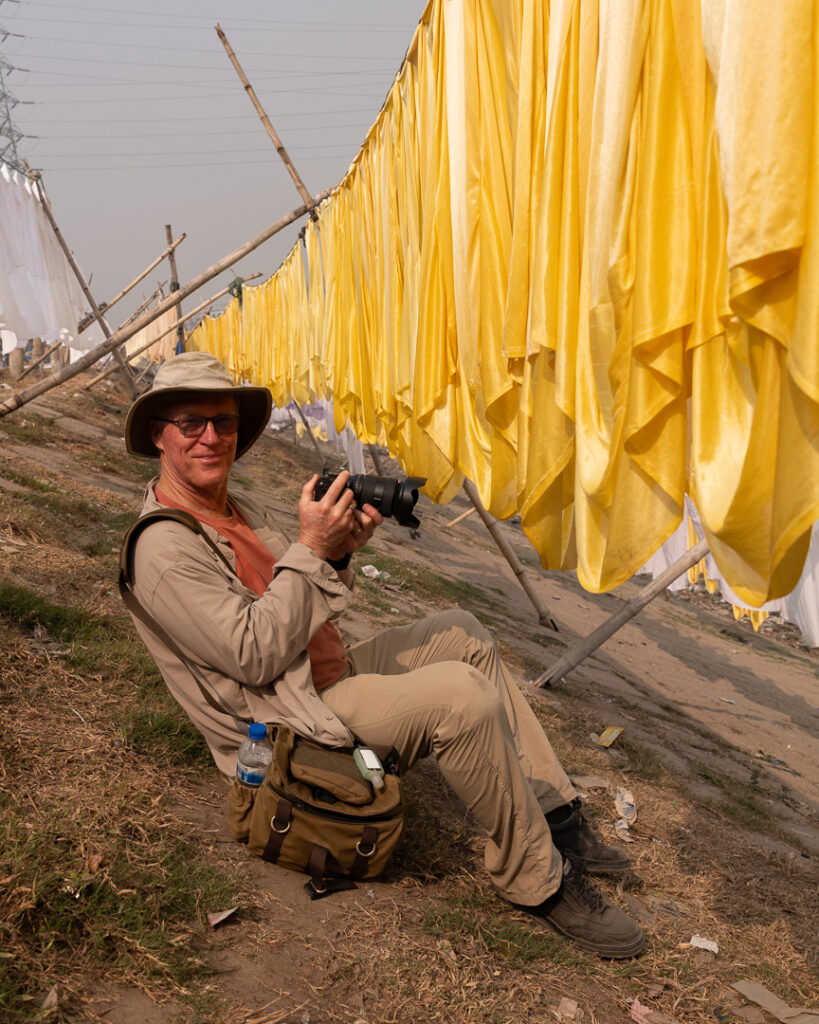
I am deeply honored to have some of my work recognized by such a prestigious organization. Thank you to the judges and staff of Global Lens Awards. After returning from Bangladesh, I am about to embark on a culturally focused trip to Central Vietnam. Next Europe, more focused on street photography, and finally Oaxaca, Mexico to experience the Day of the Dead festival. I have a long bucket list for 2027 and beyond.