Mauricio Narea — 3rd Place in Landscape
An interview with Mauricio Narea
GLPA 2025 Winner Interview
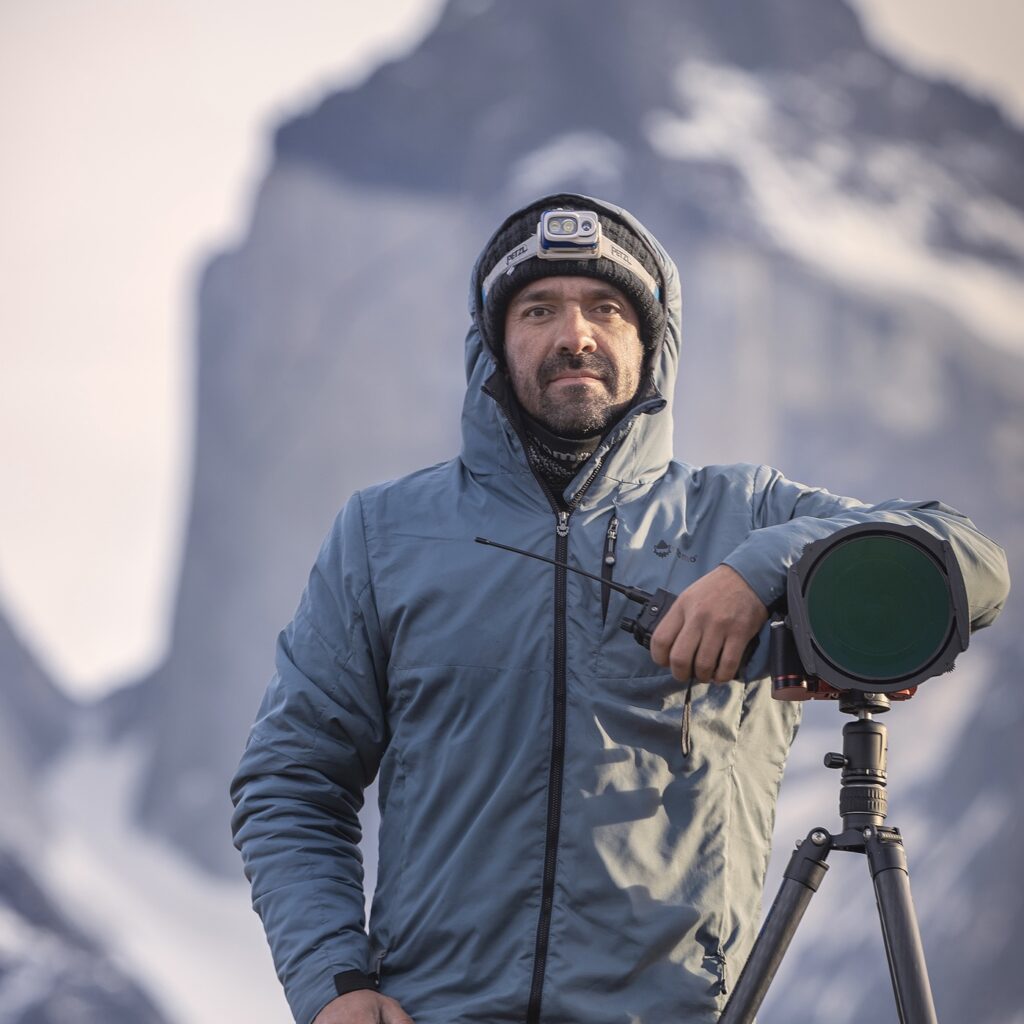
Mauricio Narea — 3rd Place, Landscape
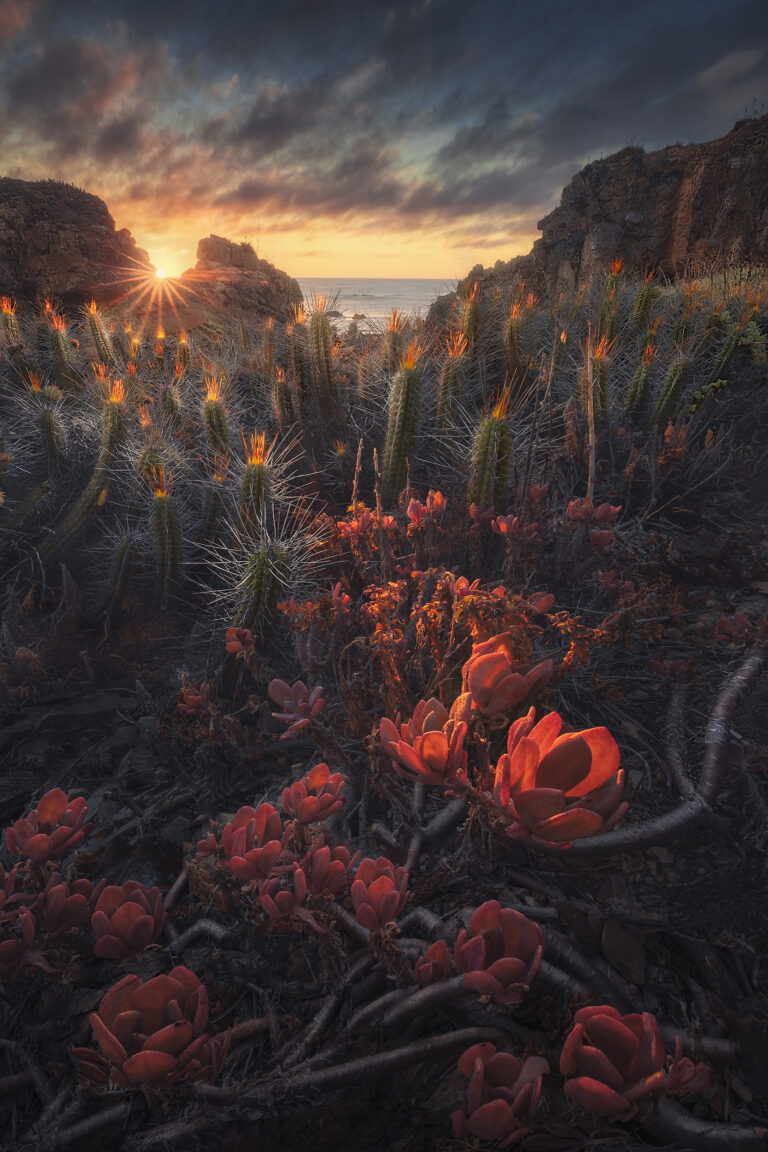
La Danza del Copao
We’re pleased to feature Mauricio Narea, 3rd Place in Landscape at the Global Lens Photography Awards 2025.
Based in Los Andes, Chile, Mauricio photographs as a bridge between nature and the viewer—seeking the quiet, moving power of the natural world,
and the exact light that elevates a scene. In La Danza del Copao, a coastal sunset turns the often-overlooked copao cactus into a glowing,
rhythmic presence—an image that celebrates energy, joy, and the responsibility to protect what is beautiful.
What does the title “La Danza del Copao” mean to you, and why did you choose it for this image?
The copao trees are those plants that appear in the photo, very typical of the central coast of Chile. I gave it that title because, during the
golden hour at sunset, the low sunlight gives the impression of making the copao trees dance and burst into bloom. It’s a natural dance that
projects dynamism and symbolizes the joy and awakening of nature in the face of the sun.
You wrote that the Copao flower “lights up” when it receives the sun’s rays. What were you looking for in the light at that coastal sunset to make the scene work?
Note that the sun would set behind the two rocky peaks visible in the background. I then sought to capture the energy of that noble golden hour
light in the scene, particularly in some living element, to convey dynamism and achieve a vibrant photograph.
How did you reach this moment—planning, patience, intuition, or a mix of all three?
My photos are always a mix of elements. I’d say 20% planning, 30% patience, and 50% intuition. In this case, the main factor was the intuition
that, with the elements I saw first thing in the morning, I could achieve something good with the right light. Then I planned the location where
the sun would set to narrow down the possible scenarios. Next, I waited patiently for several hours until the golden hour arrived and finally let
myself be surprised by the scene, having previously considered three possible close-ups. When I saw the coppa trees light up, I decided to go with
that option.
You describe photography as a link between nature and the viewer. What emotion do you want someone to feel who has never seen the Copao in real life?
Indeed, for me, photography is a way to connect nature with people. The Copao is a cactus that often goes unnoticed, lacking much appeal, especially
on most cloudy coastal days. However, when exposed to the sun, it tends to vibrate and glow dynamically with natural energy. It’s almost like a
metaphor for human beings, whose brilliance may be hidden or dimmed for some days or periods, but all it takes is a source of noble energy to
ignite it and shine beautifully.
In your statement, photography is also a way to create awareness and respect for nature. How do you think a single image can influence that responsibility?
Photography has the power to reveal the world’s horrors, as well as its rarest wonders. In this way, a photograph can showcase beauty, evoke a
powerful impact, and put a place or element of nature on a person’s map, inspiring enjoyment and appreciation. This can then generate a virtuous
cycle in which people learn about, enjoy, appreciate, and ultimately care for and preserve it.
Technically, what mattered most in this shot—composition, exposure, lens choice, or perfect timing of the light?
In order of importance, I believe the first was the perfect timing of the light, as this allowed me to make the copao trees dynamic and vibrant.
Second, the composition, which created a simple yet powerful visual journey, guiding the eye from the foreground to the blossoms, then to the
copao trees as they ignite, and finally to the sun. Third, the exposure management was crucial to capturing the full dynamic range present in this
photograph and conveying my intended message. This aspect perfectly embodies the concept of using technique to serve the visual narrative. Finally,
the choice of a wide-angle lens, while rather obvious, is important in a scene where the idea was to incorporate various elements and order the
chaos they generate, to evoke the feeling of a party, a dance at sunset. Something I couldn’t have achieved with a telephoto lens and its more
intimate approach.
You live in Los Andes, at the foot of the Andes Mountains. How has that landscape shaped your eye and your relationship with nature?
Living at the foot of the Andes Mountains makes having this colossal mountain range a part of everyday life. Feeling small before the immensity of
nature, learning to appreciate the light at different times of day, has trained my eye to be more attentive to the small details that can appear or
be enhanced when the gentle light of a sunset or sunrise arrives. The mountain range has helped me to explore options based on how the sun moves as
it rises behind the mountains.
What’s next for you—any personal project, a new series, or a place you dream of photographing soon?
My main motivation has always been to photograph and share Chile’s world-class landscapes. Along those lines, I want to showcase more of the
landscapes of northern Chile and also the Chilean autumn in the Araucanía region, which is probably one of the places in the world where the
intense variety of colors this season brings is most evident. In fact, this will be my next trip, around April 2026, when autumn is at its peak there.